Collaborations
Sport, at the core of popular culture, is public history at its best. That makes collaboration with museums, halls of fame, scholars, and community activists essential in conveying what sport has meant to people. Those collaborations make it possible to reach a larger audience and introduce questions regarding sport, health, and fitness into debates over public policy. I’ve been fortunate to work with the National Baseball Hall of Fame and Museum, the Senator John Heinz History Center, the Pittsburgh Pirates, and the Josh Gibson Foundation on several projects.
The Souls of the Game: Voices of Black Baseball
National Baseball Hall of Fame
The older I get, the more I value the chance to work with people I respect and like. I thought that the most fun I ever had doing that came twenty years ago when I was part of the team creating ¡Viva Baseball! at the Hall of Fame. I felt that sense of camaraderie and joy again while working on The Souls of the Game, the Hall’s revamped exhibit on black baseball.
Most of the Hall of Fame crew I worked with in the 1990s were still there and it was a privilege to be with them and the four other outside consultants. We argued, laughed, and collaborated over the two-year run-up to the exhibit’s opening in May 2024. The Hall of Fame crew included Tom Shieber, Mary Quinn, Nicole Retzler, and the late John Odell, who were there for ¡Viva Baseball! and Gabrielle Augustine, Josh Rawitch, Stephanie Hazzard, RJ Lara, Ken Meifert, and Jon Shestakofsky, who came to Cooperstown more recently.
The other consultants were Gerald Early, Leslie Heaphy, Larry Lester, and Rowan Ricardo Phillips. We met half a dozen times in Cooperstown, sitting around a conference table with the staff figuring out how to tell the story of the Negro Leagues in the context of baseball and America’s evolution before, during, and after integration. I felt like I was attending a master class in history as I listened to them. Despite the impressive credentials and great respect Gerald, Leslie, Larry, and Rowan have earned from decades of work, they checked their egos at the door. If I had to spend as much time at faculty meetings as we did in that room, there would have been blood.
I hope you get the chance to visit Cooperstown, an idyllic village on Lake Otsego, and spend time viewing the exhibit.
Forbes Field Exhibit at Posvar Hall
University of Pittsburgh
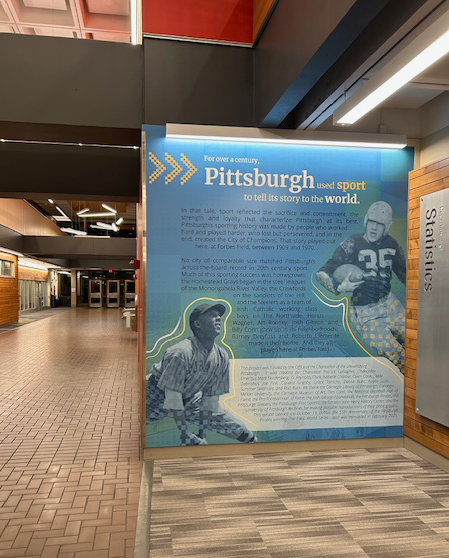
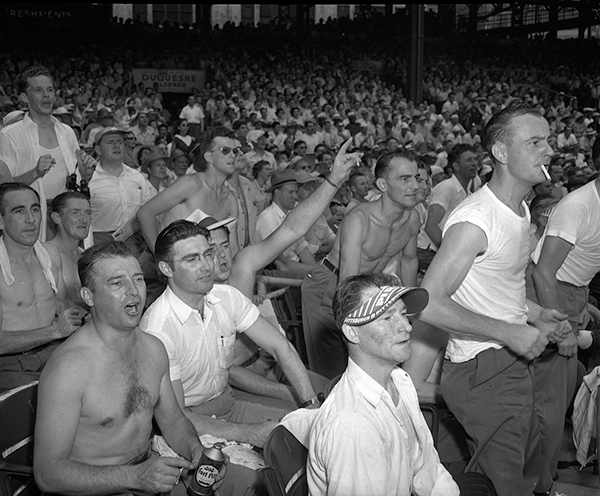
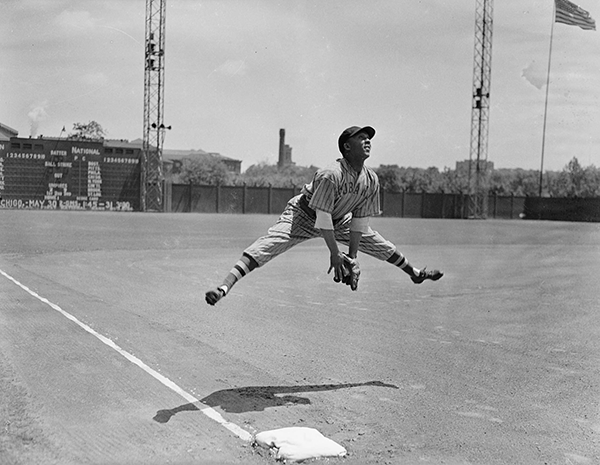
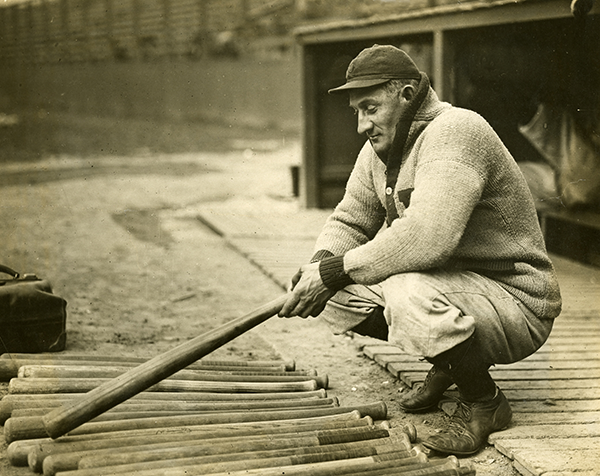
One of the collaborations I had fun working on is on display at Posvar Hall, which was built on the site of Forbes Field. My office is there, above what was once the left field bleachers. This project, designed initially by Isabelle Chartier, was installed before the pandemic and stayed down during renovations. It was redesigned and put back up in the fall of 2025. It consists of photographs of different sports played at Forbes Field, including the Pirates, Pitt football, the Steelers, the Homestead Grays, Pittsburgh Crawfords, and boxing. I’ve yet to find any shots of women competing there. Please let me know if you know of one. Here’s the overview text and some images from the exhibit.
Forbes Field
For over a century, Pittsburgh used sport to tell its story to the world. In that tale, sport reflected the sacrifice and commitment, the strength and loyalty that characterize Pittsburgh at its best. Pittsburgh’s sporting history was made by people who worked hard and played harder, who lost but persevered, and in the end, created the City of Champions. That story played out here, at Forbes Field, between 1909 and 1970.
No city of comparable size matched Pittsburgh’s across-the-board record in 20th century sport. Much of this sporting success was homegrown: the Homestead Grays began in the steel leagues of the Monongahela River Valley, the Crawfords on the sandlots of the Hill, and the Steelers as a team of Irish Catholic working class boys on the Northside. Honus Wagner, Art Rooney, Josh Gibson, and Billy Conn grew up in its neighborhoods; Barney Dreyfuss and Roberto Clemente made it their home. And they all played here at Forbes Field.
The Western Pennsylvania Sport History Museum,
City of Champions Exhibit
In 2004, the Senator John Heinz Pittsburgh History Center opened a museum about sport in Western Pennsylvania. Steel once defined Pittsburgh. But as the mills that powered the region’s economy and daily rhythms entered their death spiral in the 1970s, Pittsburgh acquired a new identity, that of the City of Champions. No city uses sport more to tell its story to the world. Pittsburgh’s across-the-board record in 20th century sport was unrivalled by any city of comparable size. Much of its success was homegrown—powered by people who grew up here like Art Rooney, Cumberland Posey, Jr., Josh Gibson, and Billy Conn. The Pittsburgh Steelers, Homestead Grays, and the Pittsburgh Crawfords each began play on local sandlots. The sport museum captures not only the teams and individuals who have made their mark on sport, but the grassroots from which they emerged. I was the guest historian for the project.
2006 Baseball Hall of Fame Selection Committee
In 2006, the National Baseball Hall of Fame formed a special committee to vote on the candidacy of individuals from the Negro Leagues and the Caribbean who played during the years when a color line marred major league baseball. It did so after an extensive research project compiled evidence of their contributions to baseball in Negro League, Mexican, and Caribbean play. The committee of scholars vetted an extensive list of candidates and voted seventeen men and one woman into the Hall of Fame.
Read More:
Woman Among 17 Elected to Hall of Fame, New York Times, Feb. 28, 2006
Hall of Fame Announces Negro League Inductees, NPR, February 28, 2006
¡Viva Baseball!
¡Viva Baseball!, which opened in 2009, was created by a team of National Baseball Hall of Fame and Museum staff and advisors: Milton Jamail (Venezuelan Bust, Baseball Boom: Andres Reiner and Scouting on the New Frontier, and Full Count: Inside Cuban Baseball); Alan Klein (Growing the Game: The Globalization of Major League Baseball, Sugarball: The American Game, the Dominican Dream, Baseball on the Border, and How the Major Leagues Colonized the Black and Latin Game); Tim Wendel (Far From Home: Latino Baseball Players in America, and The New Face of Baseball: The One-Hundred-Year Rise and Triumph of Latinos in America's Favorite Sport); Adrian Burgos, Jr. (Playing America's Game: Baseball, Latinos and the Color Line); and me. I’ve never had more fun than I did working with these people on this project.
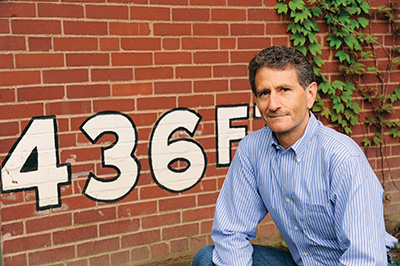
After the energy of the 1960s faded, Rob Ruck began studying labor and social movements at the University of Pittsburgh, where he now teaches the history of sport. In courses, books, and documentaries, he's focused on how different groups of people use sport to tell a story about themselves. He still lives in Pittsburgh but lost his best friend, co-author, and wife Maggie Patterson in November 2025. Maggie made Rob a much better writer and person, something she did for many friends and students over the years.
Curriculum Vitae
Download it here.
Contact Rob
Email: rucco@pitt.edu or ruck439019@aol.com
Phone: 412-482-0174
Rob Ruck
3536 Posvar Hall
University of Pittsburgh
Pittsburgh, PA 15260